Exhibiting at Printfest: A Practical Guide from Setup to Takedown
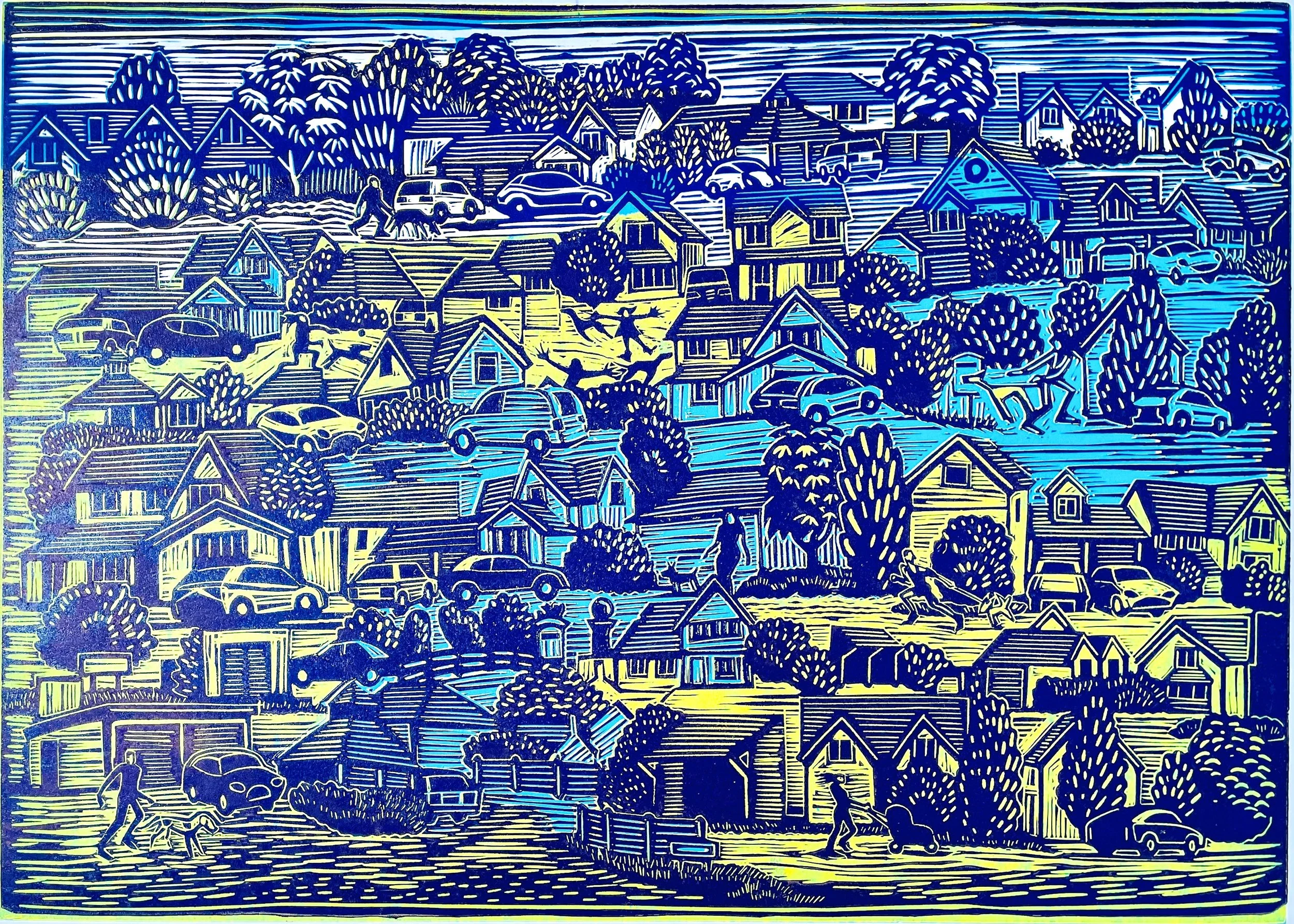
Morning Walk linocut detail. Photograph Mark Jones
Exhibiting at Printfest for the first time is both exciting and slightly daunting. After taking part, I can say it’s one of the most rewarding and instructive experiences I’ve had as a printmaker.
If you’re considering applying, this guide walks through the full experience—from preparation and setup through to sales, takedown, and what I’d do differently next time.
How to Prepare for Printfest as an Exhibitor
Preparation starts well before you arrive.
For me, that meant selecting a cohesive group of linocut prints from an ongoing body of work. Choosing what to show isn’t just about picking your strongest pieces—it’s about how they sit together and read as a whole.
Packing and transport are equally important. Prints, frames, fixings, tools—it adds up quickly, and everything needs to arrive intact and organised. One of the most useful things I did was plan my stand layout in advance, so I wasn’t making decisions on the spot.
Tip: Sketch your wall layout before you arrive. It saves time and reduces stress during setup.
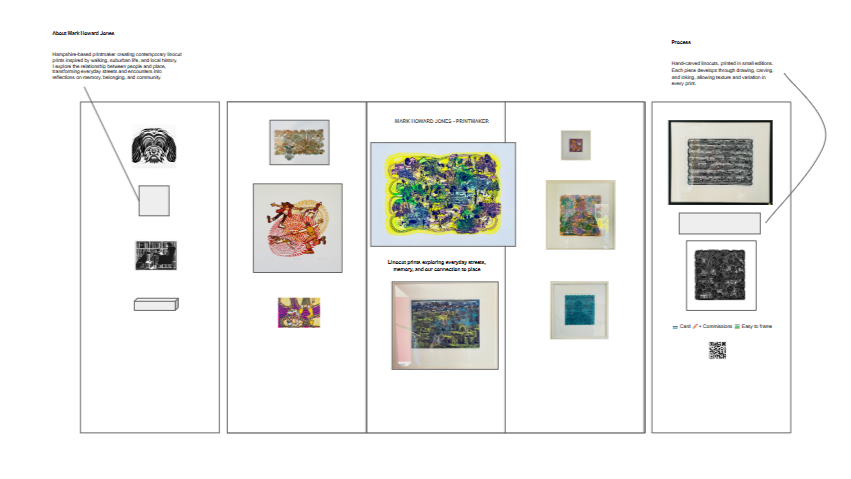
Screenshot of PrintFEST stand Plan. MarkJones png
Unloading and Setting Up Your PrintFEST Stand
The logistics on arrival were noticeably well organised. Unloading was calm, structured, and efficient - something that makes a real difference when you’re carrying a lot of work and equipment.
Because I had a clear visual plan, setting up felt straightforward. Rather than experimenting with placement, I could focus on getting the work up quickly and accurately.
That shift - from preparation to presentation - is a key moment. Seeing the prints on the wall, properly lit and spaced, changes how you view your own work.
What helps:
Arrive with a layout plan
Label your work clearly
Bring basic tools and backups
How to Display Prints at an Art Fair
A strong display does more than look good - it helps your work connect.
What worked for me was keeping things visually consistent and uncluttered. Giving each piece space allowed the detail of the linocuts to come through, while the overall arrangement created a rhythm across the stand.
One thing I’d refine further is how the work reads at a distance. At busy moments, visitors often scan before they engage—so clarity from a few steps back matters.
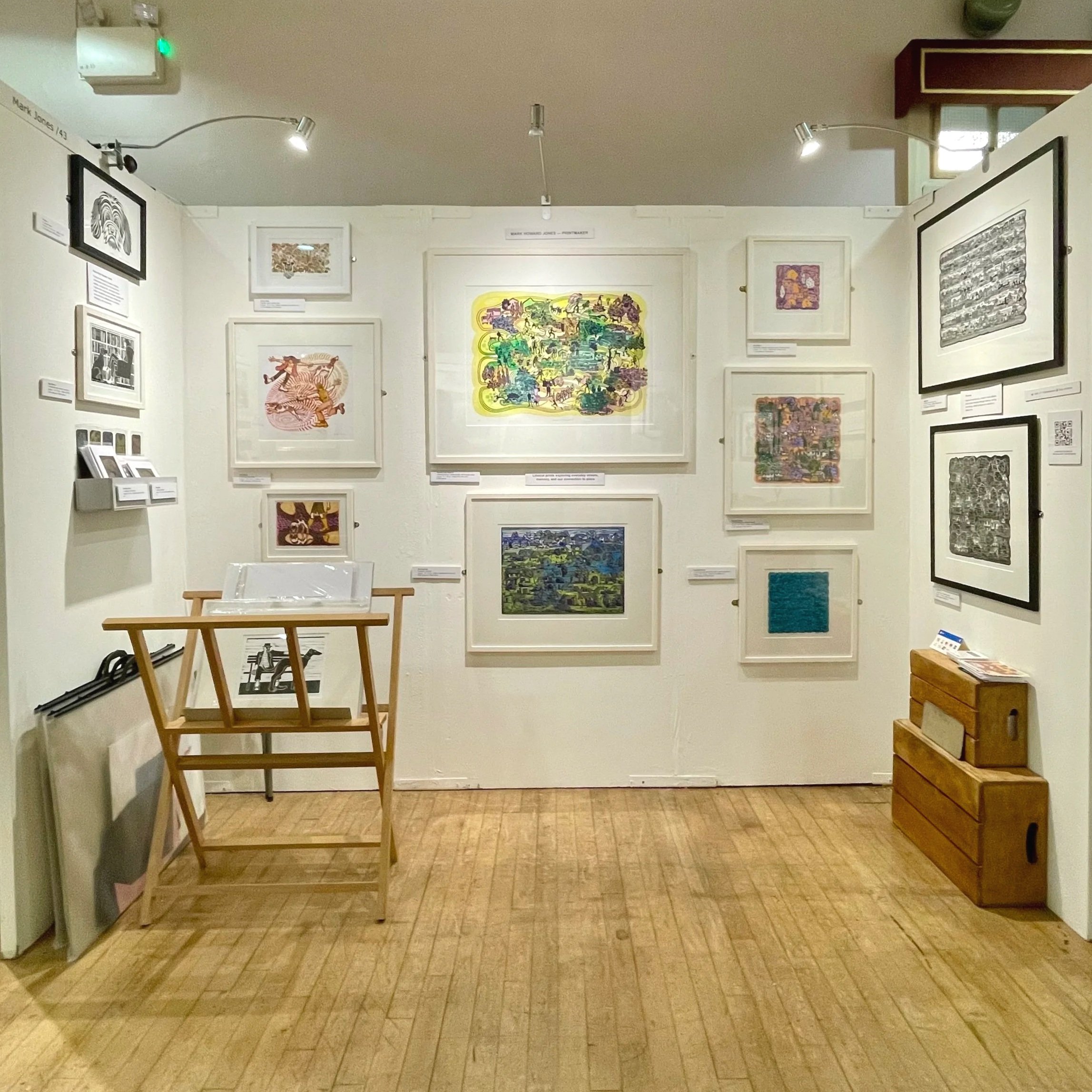
Mark Jones stand 43. Print Fest Ulverston 1 - 3 May 2026 photograph Mark Jones
Key considerations:
Can your work be understood from a distance?
Are prices easy to find?
Does the display guide the viewer naturally?
Talking to Visitors at Printfest
One of the defining aspects of Printfest is the audience.
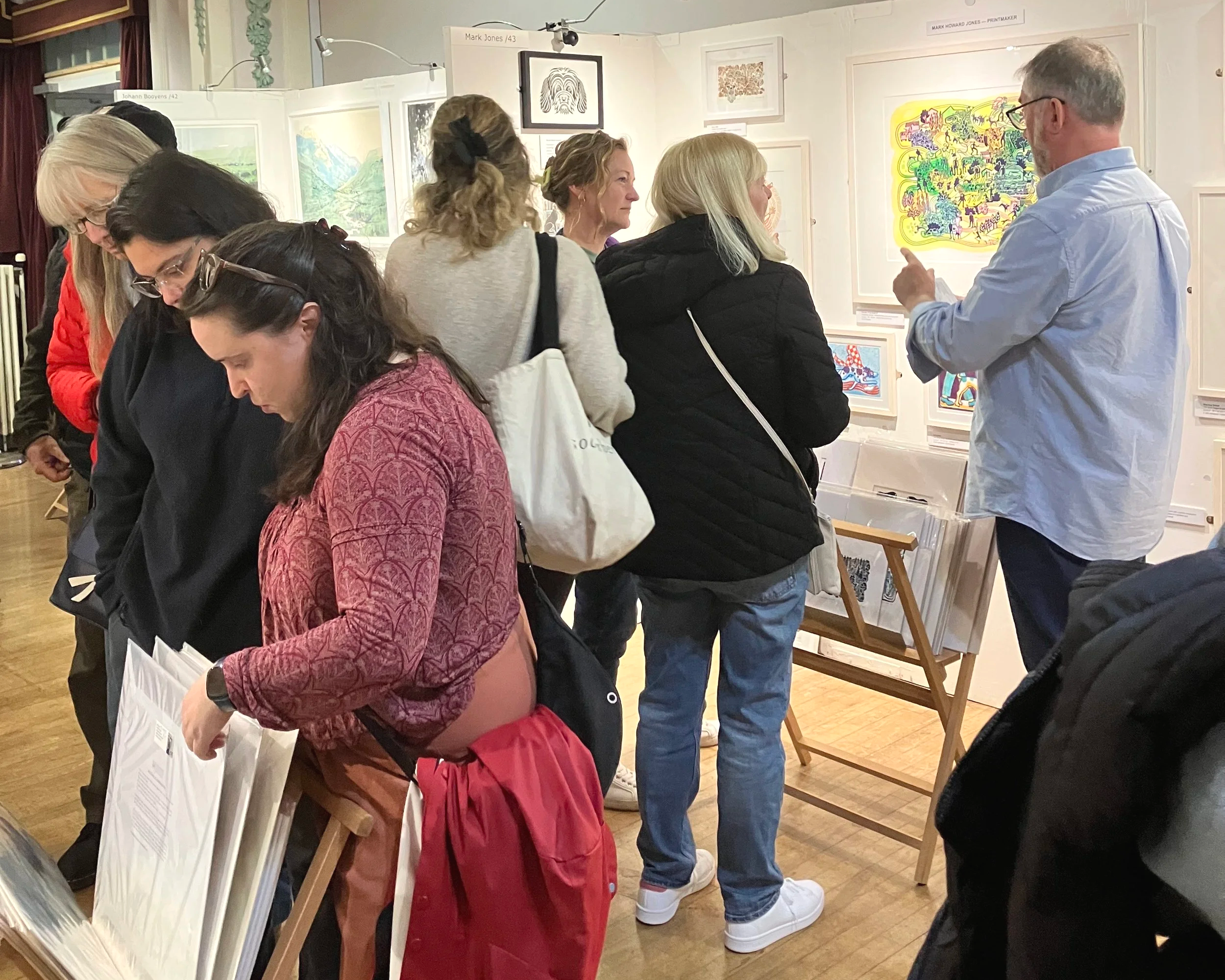
PrintFEST Ulverston, Mark talking with customers. Photograph Sue Jones
Visitors are often very knowledgeable about printmaking, which changes the nature of conversations. Rather than surface-level comments, people ask about process, technique, and decision-making.
Explaining how a linocut is made—carving, inking, printing—becomes part of the experience. Those conversations build connection, and that connection often leads to sales.
What works:
Be open and conversational
Talk about process, not just outcome
Let people look—don’t rush the interaction
Taking Payments at Printfest: What Worked
Sales always come with practical considerations.
At one key moment, our SumUp card reader stopped working. Not ideal - but switching to phone payments turned out to be quicker and simpler than expected.
It’s a good reminder that backup systems matter, but also that simple solutions are often more reliable than you think.
Lesson: Always have a fallback for payments - and keep it straightforward
The Quality of Printmaking at Printfest
The overall standard of work was exceptionally high.
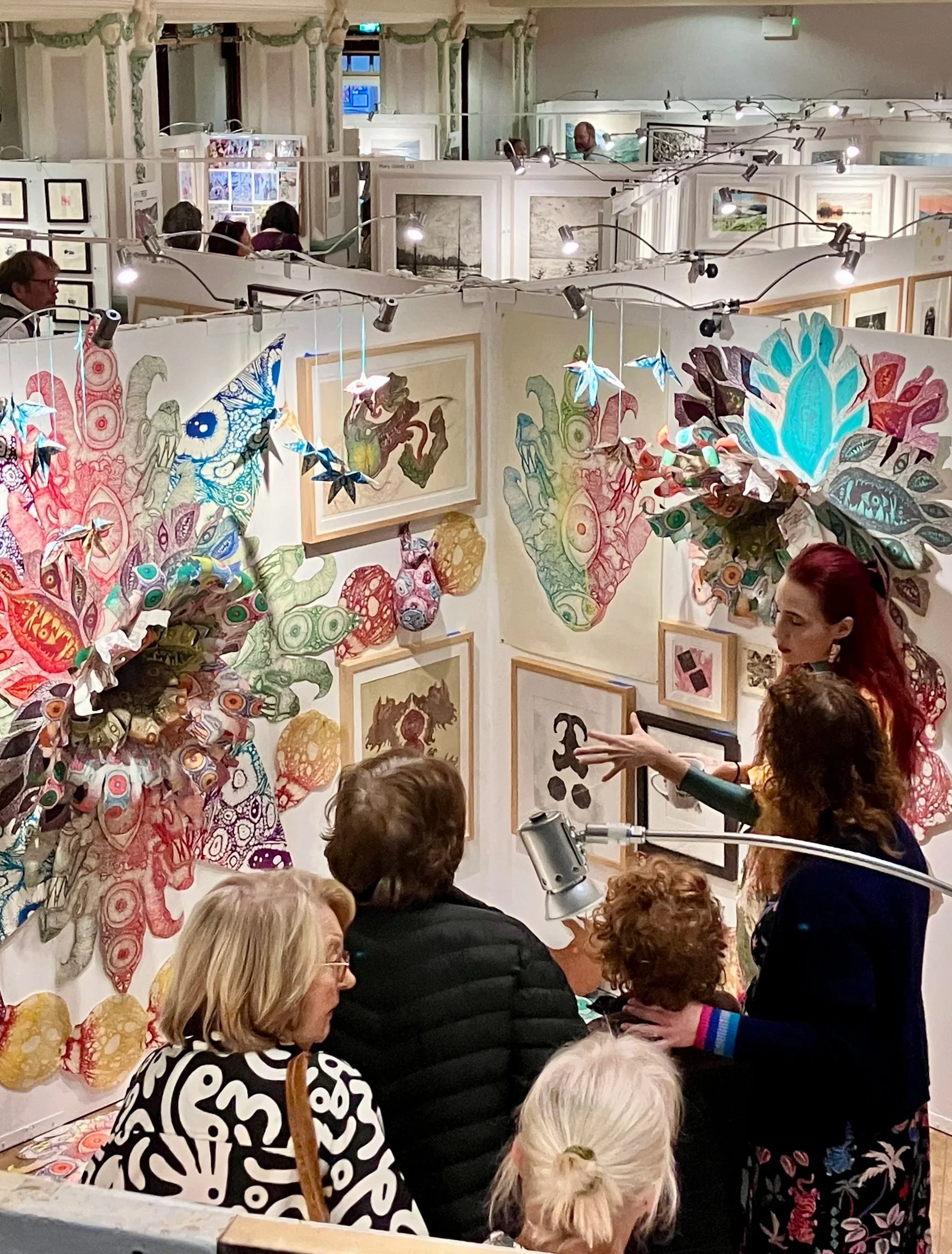
View from above of PrintFEST exhibitors and visitors. Stephanie Berry and her exhibition stand in the foreground.
Being surrounded by that level of printmaking is both inspiring and challenging. It raises your expectations—not just of your work, but of how you present it.
With 14 awards handed out over the weekend, there’s a clear sense of both quality and recognition. It’s a serious environment, but a supportive one too.
Packing Down After Printfest
The takedown was as efficient as the setup.
After an intense weekend, that matters. Everything moved quickly and smoothly, and before long the space was cleared.
It’s a strange moment - going from a fully realised display back to packed boxes - but it gives you time to reflect on what just happened.
What Worked Well at My First Printfest
Having a clear visual plan for the stand
Creating space for genuine conversations
Staying adaptable when things didn’t go to plan
What I’d Do Differently Next Time
Refine the display so work reads more clearly at a distance
Improve pricing visibility
Prepare more thoroughly for busy periods
Build in better backup systems (especially for sales)
Final Thoughts: Is Printfest Worth It?
For me, Printfest felt like a real step forward.
Not just in terms of sales, but in understanding how the work exists in a public space - how people engage with it, question it, and respond to it in real time.
If you’re a printmaker considering applying, it’s well worth it. Just go in prepared, stay flexible, and treat it as both an opportunity and a learning experience.
See Available Work
If you couldn’t attend Printfest, you can view available linocut prints here:
👉 www.markhowardjones.art
👉 Instagram: @mark.jones.art